Home > Nickel Alloy > Nickel Alloy Flanges
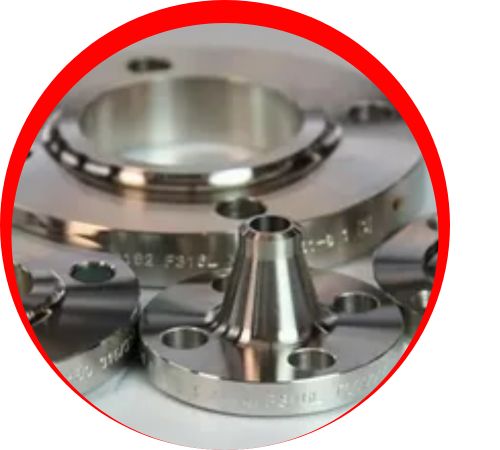
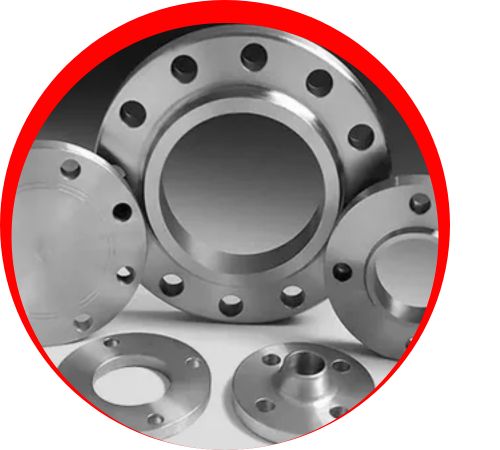
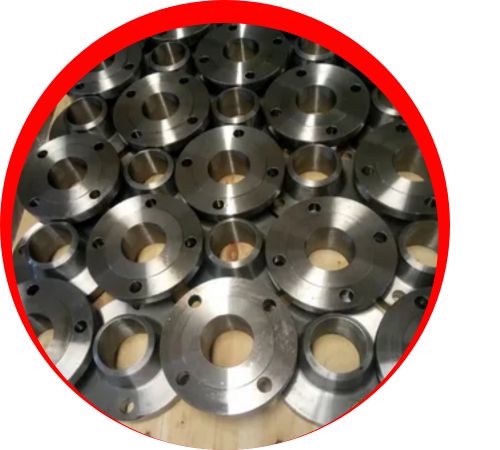
Santner Nickel Alloys, a leading manufacturer and supplier located in Hamilton, New Zealand, is recognized for producing top-notch nickel-based products designed for tough industrial applications. Among their specialized products, **Nickel Alloy Flanges** stand out for their remarkable strength, resistance to corrosion, and durability in harsh environments. Crafted to meet strict international standards, these flanges ensure dependable connections in piping systems that face high pressure, extreme temperatures, and aggressive chemicals. Santner Nickel Alloys caters to various industries, including petrochemical, chemical processing, marine engineering, oil and gas, and power generation, offering precision-engineered flanges that guarantee long-lasting performance and safety.
**Nickel Alloy Flanges** are mainly made from high-purity nickel, blended with elements like chromium, molybdenum, iron, and copper, depending on the specific grade. This unique composition gives them excellent resistance to corrosion, especially in acidic and caustic settings, along with impressive tensile strength and toughness. The flanges also showcase good ductility, thermal stability, and resistance to stress-corrosion cracking. Their outstanding mechanical properties enable them to maintain structural integrity even under high pressure and extreme temperatures. These qualities make Nickel Alloy Flanges essential components for critical industrial piping and pressure-containing applications.
| Dimensions | ASTM B564 / B182 |
| Grades | Nickel Alloy |
| Size | 1/8″ NB TO 48″ NB. |
| Class | 150#, 300#, 400#, 600#, 900#, 1500#, 2500#, 3000#. Also as per the National & International Standard. |
| Standard | SORF, SOFF, SOLJ, SWFF, WNRF, WNFF, WNRTJ, LWNRF, BLRF, BLFF, BLRTJ, SWRF, LAP Joint, Threaded, Reducing, Spectacle, Orifice & Studding Outlet are manufactured according to ANSI B 16.5, B 16.47 Series A (MSS SP-44), B 16.47 Series B (API 605), MSS SP-43, DIN 2527, DIN 2566, DIN 2576, DIN 2632, DIN 2633, DIN 2634, DIN 2635, DIN 2642, BS 10, IS 1538 & IS 6392, etc |
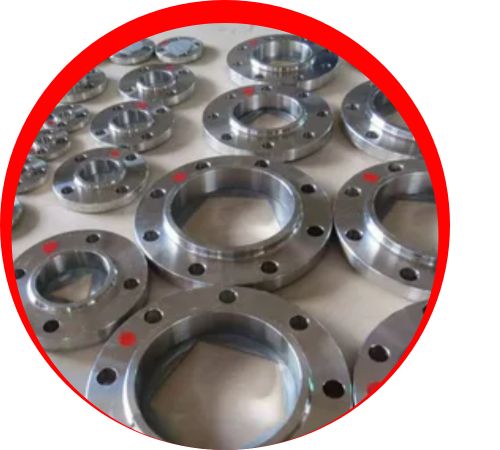
| Types of Flanges | Weld neck Flanges (WNRF), Slip-on Flanges (SORF), Blind Flanges (BLRF), Lap Joint Flanges, (SOLJ), Socket-weld Flanges (SWRF), Screwed (Threaded) Flanges, Long weld neck Flanges (LWNRF), Spectacle Blind Flanges, Spacer & Blind Flanges, Ring Type Joint Flanges (RTJ), Reducing Flanges, Raised Face (RF) Flanges, Orifice Flanges, Deck Flange, Large Diameter Flanges, Custom Flanges, Drawing Flanges, Forged Flanges, Plate Flanges, Flat Face Flanges, etc. |
| Form | Slip-On Flange (SO), Blind Flange (BL), Lap Joint Flange (LF), Socketweld Flange (SW), Weld Neck Flange (WN), Long Weld Neck Flange (LWN), Ring Type Joint (RTJ), Threaded Flange, Customized Flange with Raised Face (RF), Flat Face (FF). |
| C | Mn | Si | S | Cu | Fe | Ni | |
| Nickel | 0.15 max | 0.35 max | 0.35 max | 0.01 max | 0.25 max | 0.40 max | 99.0 min |
| Element | Density | Melting Point | Tensile Strength | Yield Strength (0.2%Offset) | Elongation |
| Nickel Alloys | 8.9 g/cm3 | 1446 °C (2635 °F) | Psi – 67000 , MPa – 462 | Psi – 21500 , MPa – 148 | 45 % |
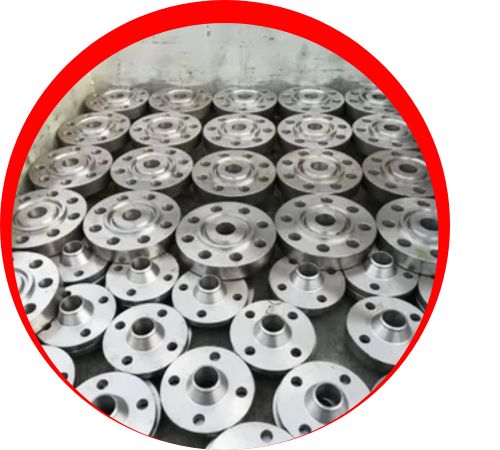
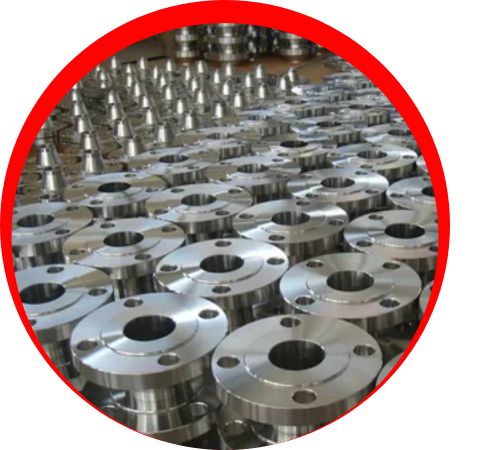
At Santner Nickel Alloys, we take pride in being the largest supplier, exporter, and manufacturer of Nickel Alloy Flanges in Hamilton, New Zealand, providing cutting-edge solutions for all your piping needs. Our state-of-the-art production plants are strategically located in the New Zealand, allowing us to maintain a vast inventory of over 16,000 tons of premium-quality materials readily available in stock. We are dedicated to delivering superior products and services, ensuring reliability and excellence for our global clientele.
Contact us to get a quick quote for your requirement.
**Nickel Alloy Flanges** find extensive use in industries that demand robust, corrosion-resistant, and high-strength piping connections. In chemical processing facilities, they link reactors, heat exchangers, and pipelines that come into contact with corrosive substances. Petrochemical and oil & gas sectors utilize them for applications involving high pressure and high temperatures. The marine industry depends on these flanges for systems that resist seawater, while power generation facilities rely on them for their durability and reliability in demanding environments.